Prisma Client 多表 CRUD 的全部 api
上节我们过了一遍 Prisma Client 做 CRUD 的 api,但那只是针对单表的,这节我们把涉及到多表的 CRUD 的 api 过一遍。
创建个新项目:
mkdir prisma-client-api2
cd prisma-client-api2
npm init -y
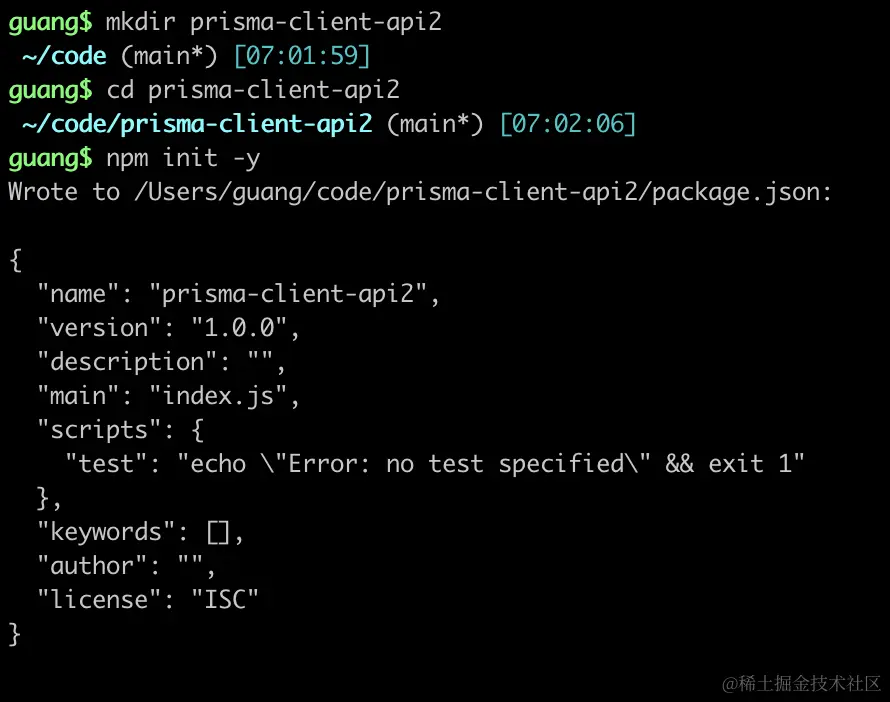
进入项目,执行 init 命令:
npx prisma init
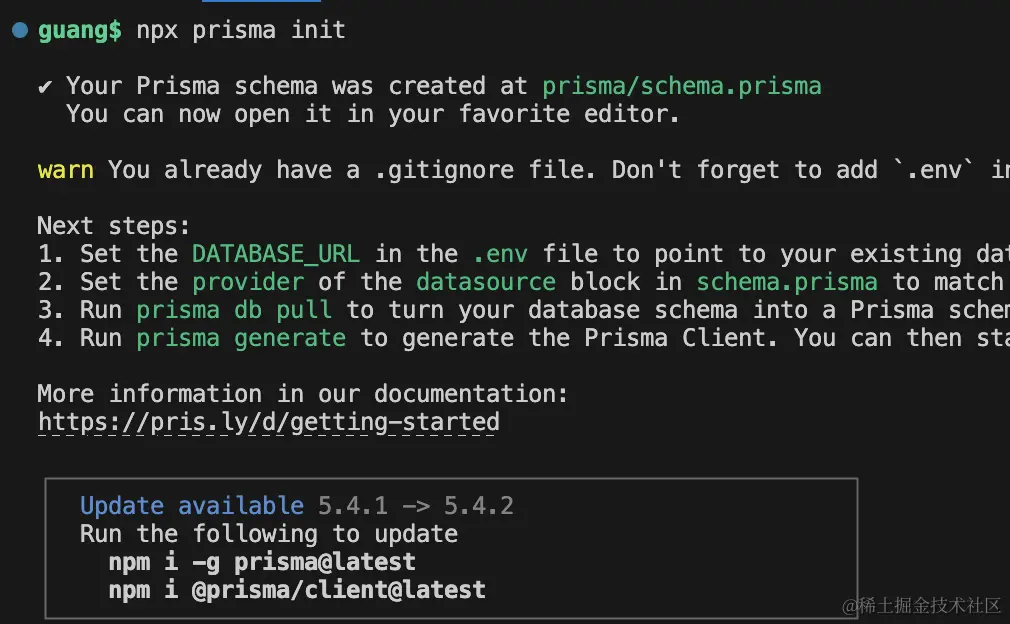
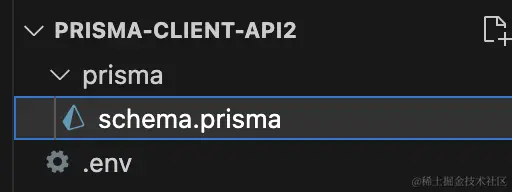
生成了 .env 和 schema 文件:
然后改下 .env 文件的数据库连接信息:
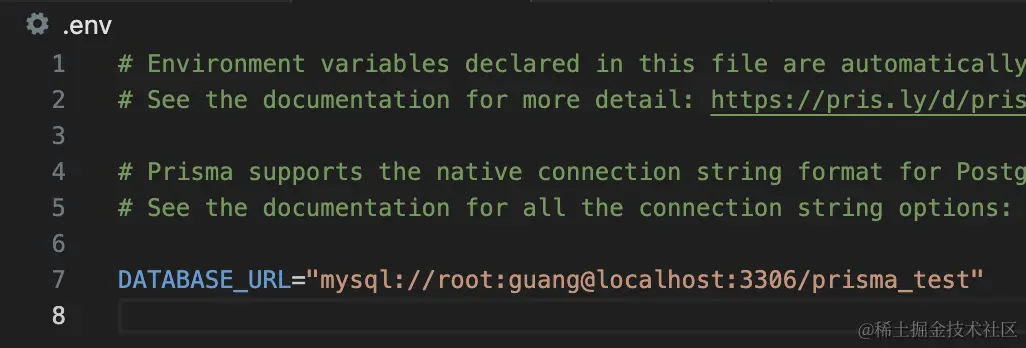
DATABASE_URL="mysql://root:guang@localhost:3306/prisma_test"
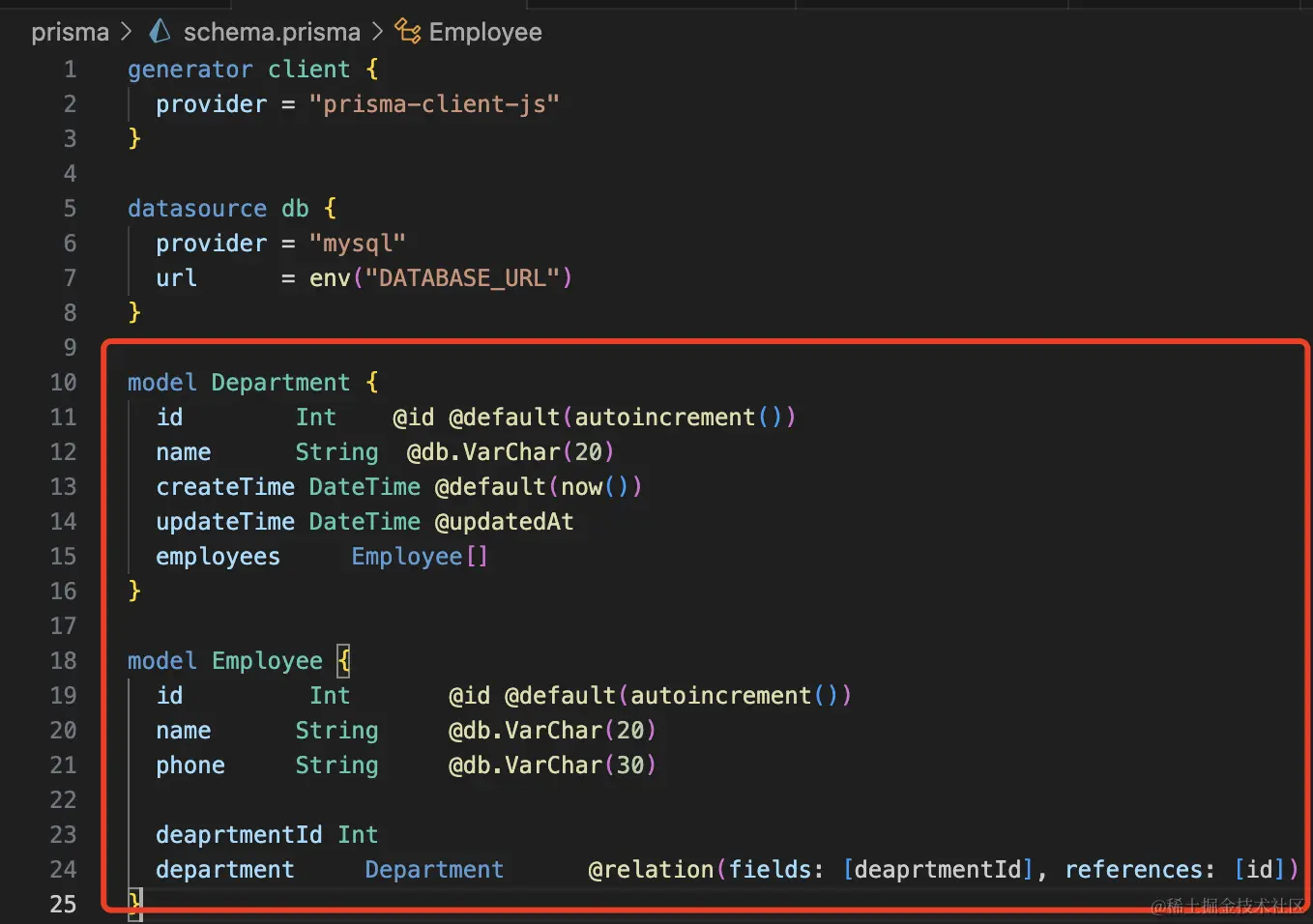
改一下 datasource 的 provider 为 mysql,并且添加 model
generator client {
  provider = "prisma-client-js"
}

datasource db {
  provider = "mysql"
  url      = env("DATABASE_URL")
}

model Department {
  id        Int    @id @default(autoincrement())
  name      String  @db.VarChar(20)
  createTime DateTime @default(now())
  updateTime DateTime @updatedAt
  employees     Employee[]
}

model Employee {
  id         Int       @id @default(autoincrement())
  name      String     @db.VarChar(20)
  phone     String     @db.VarChar(30)

  deaprtmentId Int
  department     Department      @relation(fields: [deaprtmentId], references: [id])
}
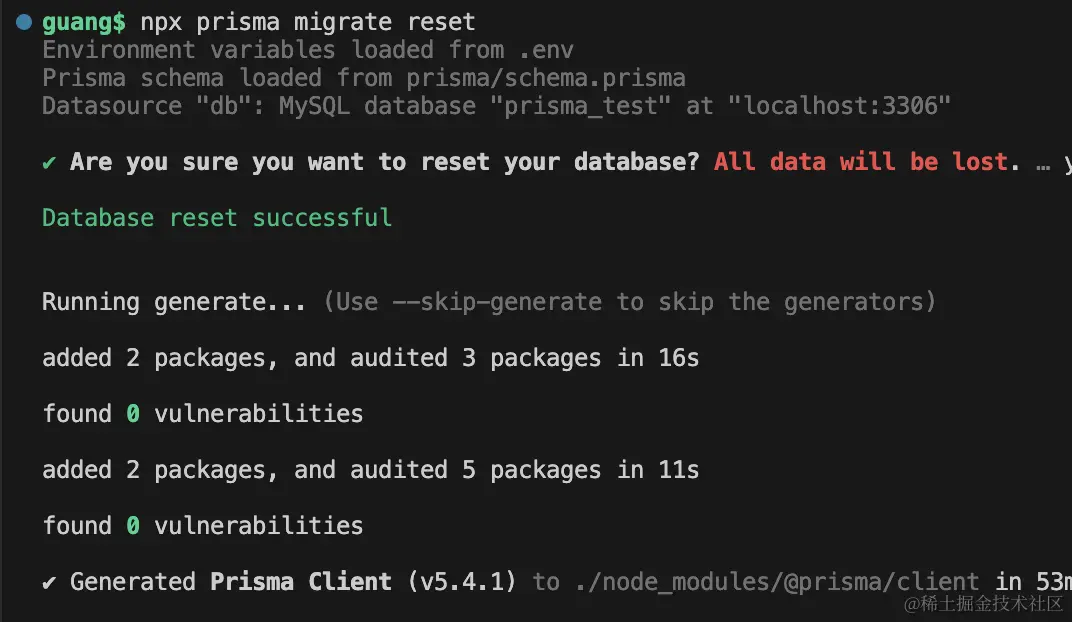
之后执行 migrate reset 重置下:
npx prisma migrate reset
然后用 migrate dev 创建新的迁移:
npx prisma migrate dev --name aaa
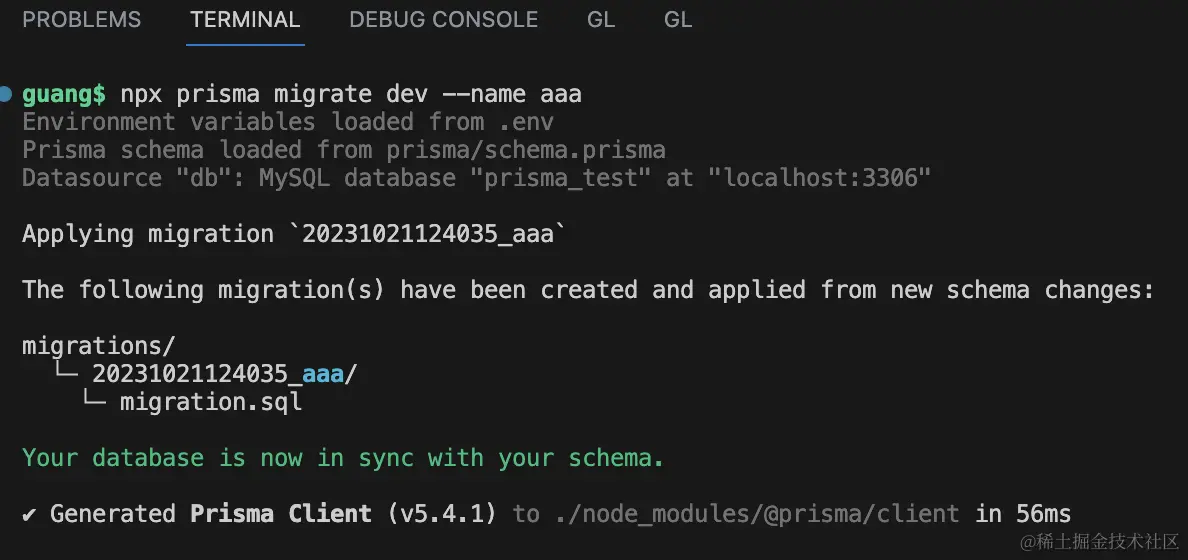
生成了 client 代码,还有 sql 文件。
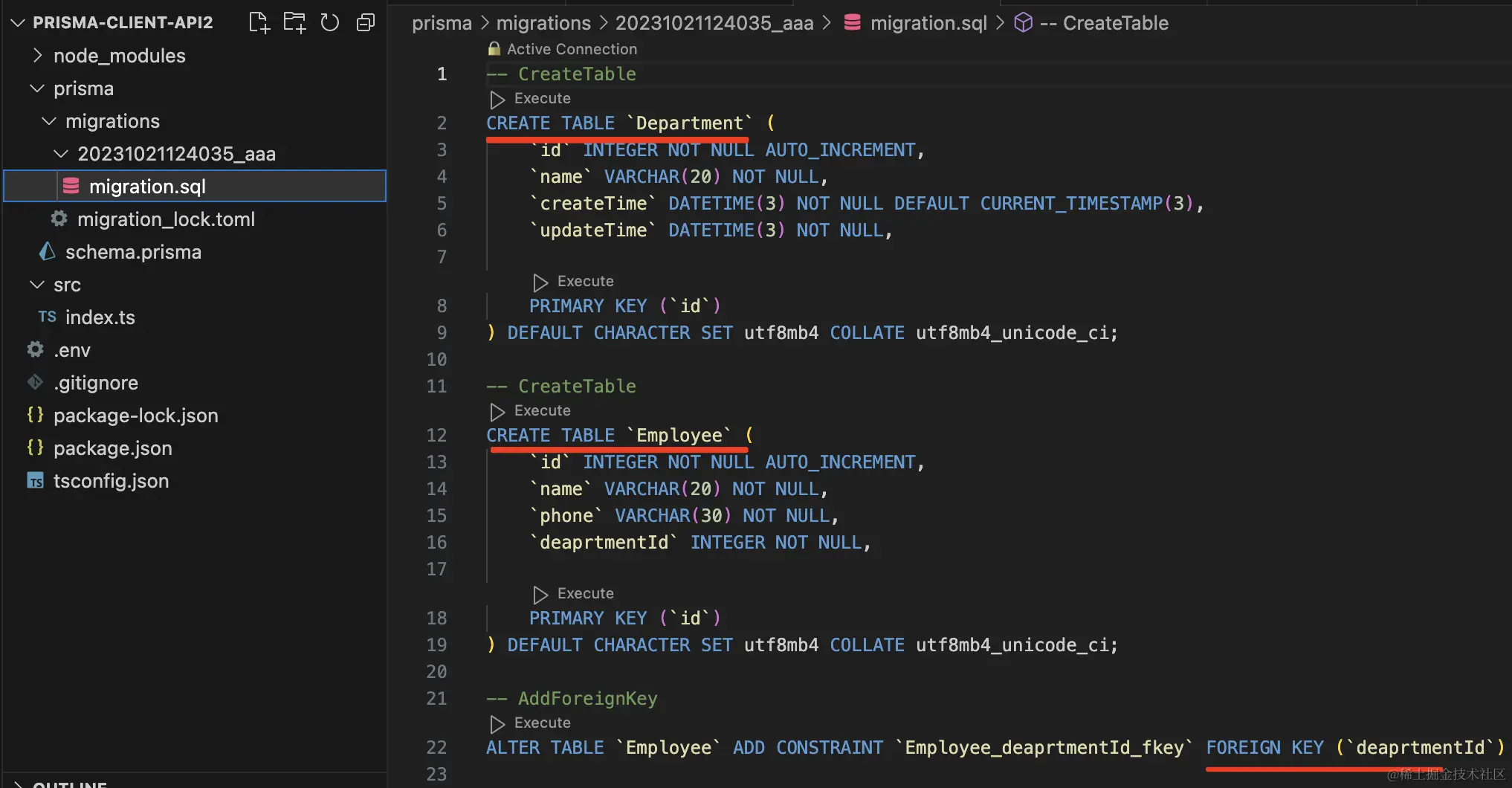
数据库中也多了这 2 个表:
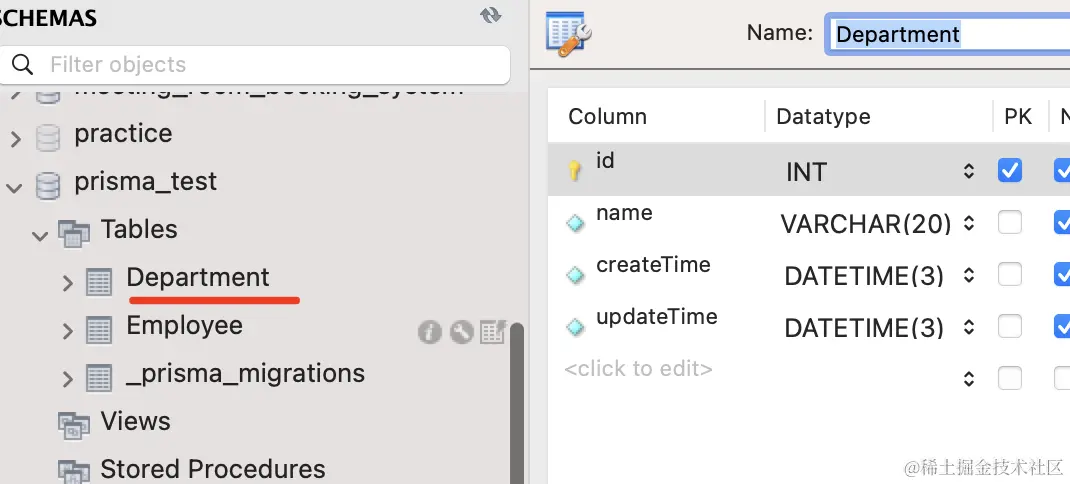
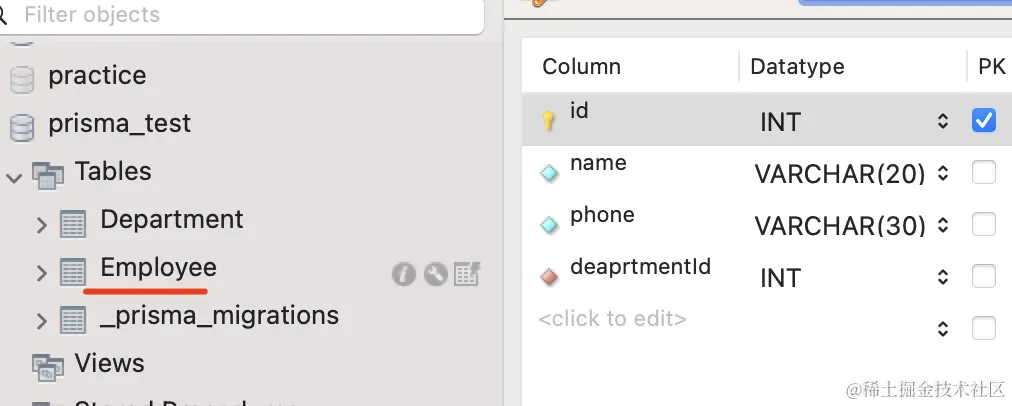
然后来写下 client 的 crud 代码。
首先安装 ts、ts-node 包:
npm install typescript ts-node @types/node --save-dev
创建 tsconfig.json
npx tsc --init
把注释删掉,保留这些配置就行:
{
    "compilerOptions": {
        "target": "es2016",
        "module": "commonjs",
        "types": ["node"],
        "esModuleInterop": true,
        "forceConsistentCasingInFileNames": true,
        "strict": true,
        "skipLibCheck": true
    }
}
创建 src/index.ts
import { PrismaClient } from "@prisma/client";

const prisma = new PrismaClient({
    log: [
        {
            emit: "stdout",
            level: "query",
        },
    ],
});

async function main() {}

main();
然后分别做下 CRUD。
首先是插入数据:
import { PrismaClient } from "@prisma/client";

const prisma = new PrismaClient({
    log: [
        {
            emit: "stdout",
            level: "query",
        },
    ],
});

async function test1() {
    await prisma.department.create({
        data: {
            name: "技术部",
            employees: {
                create: [
                    {
                        name: "小张",
                        phone: "13333333333",
                    },
                    {
                        name: "小李",
                        phone: "13222222222",
                    },
                ],
            },
        },
    });
}

test1();
插入关联 model 的数据的时候,也是用 create 指定:
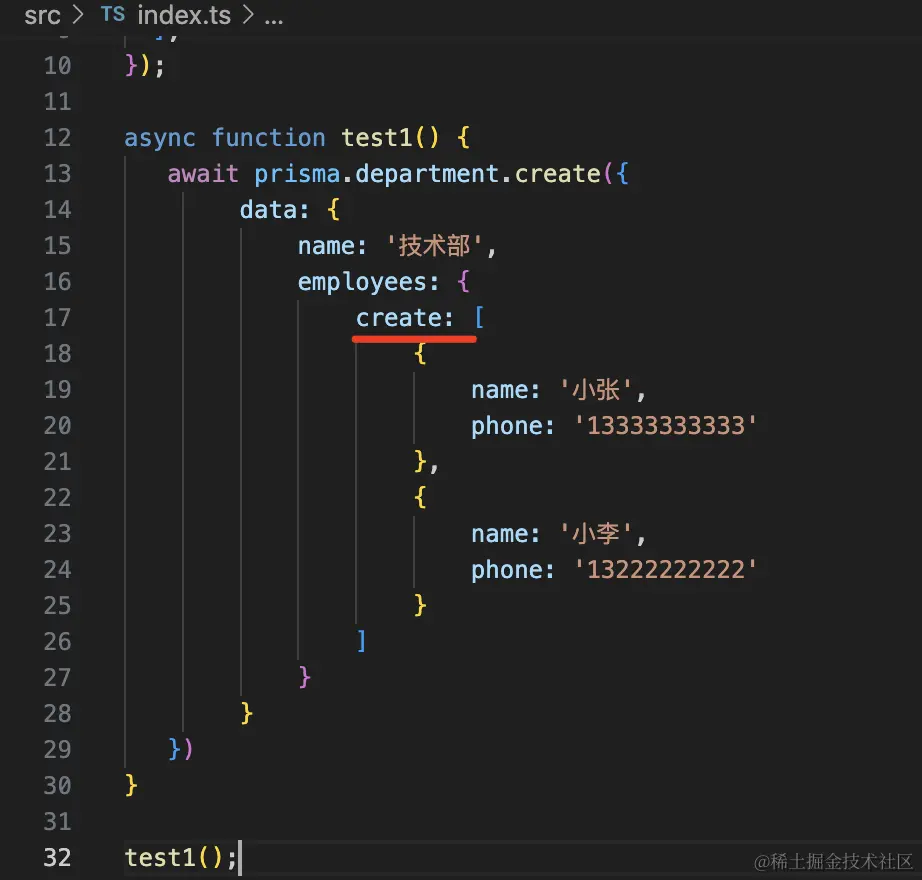
测试下:
npx ts-node ./src/index.ts

在 mysql workbench 里看下结果:
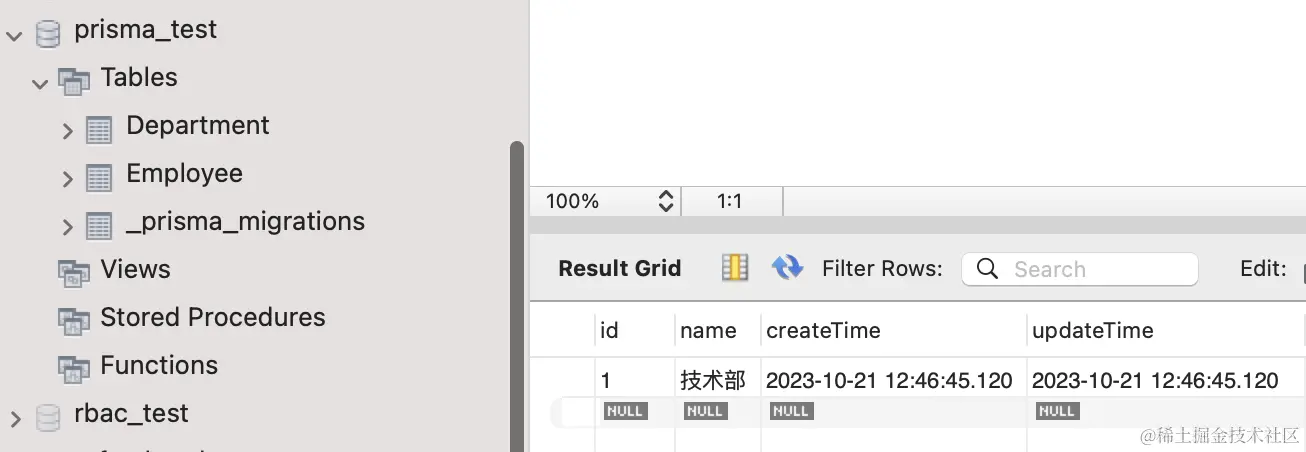
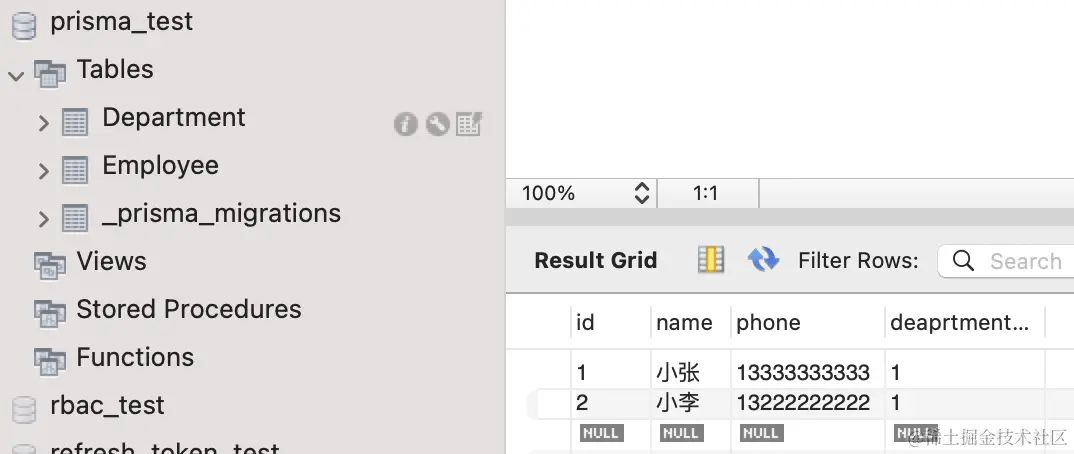
确实,数据都被正确插入了。
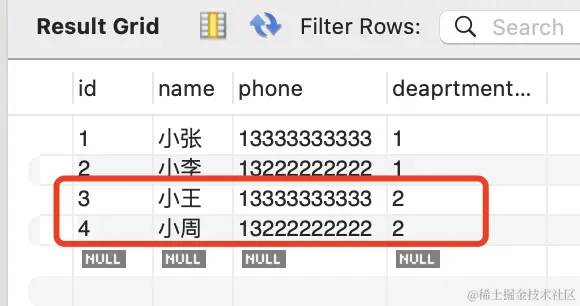
当然,你也可以用这种写法:
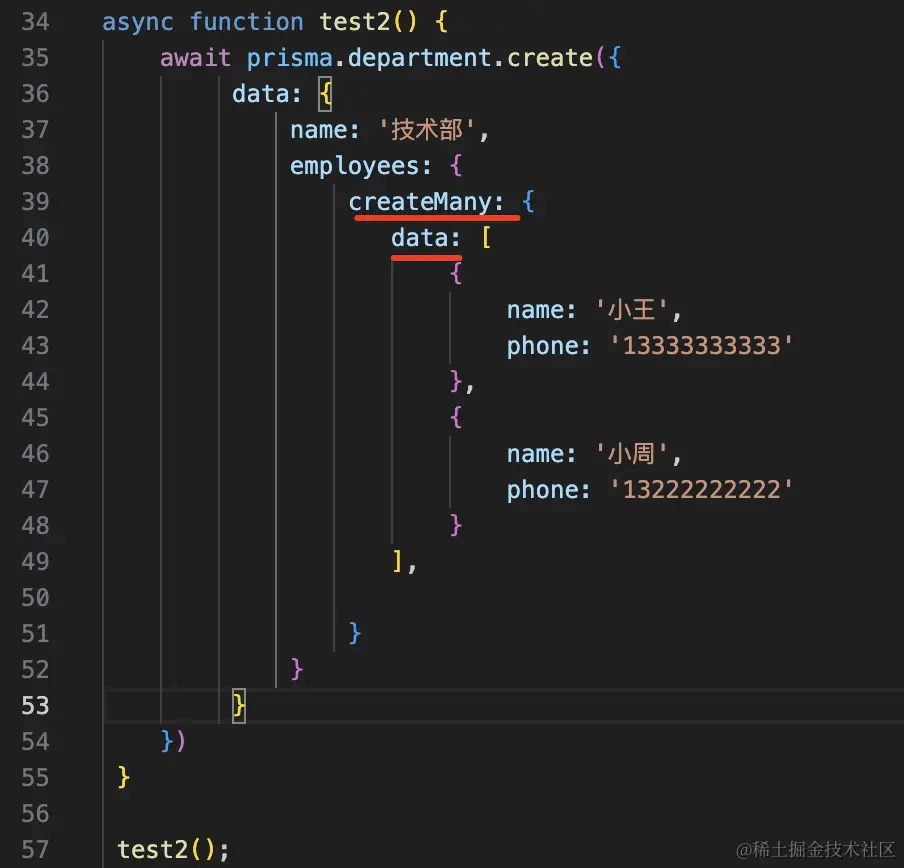
async function test2() {
    await prisma.department.create({
        data: {
            name: "技术部",
            employees: {
                createMany: {
                    data: [
                        {
                            name: "小王",
                            phone: "13333333333",
                        },
                        {
                            name: "小周",
                            phone: "13222222222",
                        },
                    ],
                },
            },
        },
    });
}

test2();
跑一下:
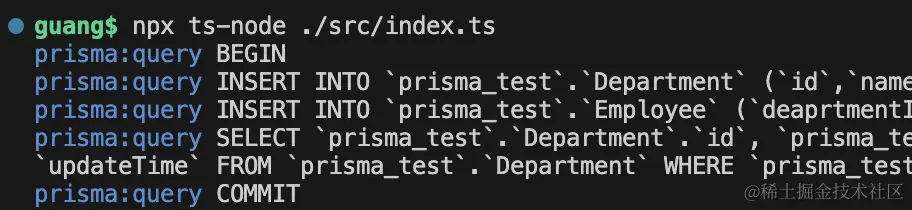
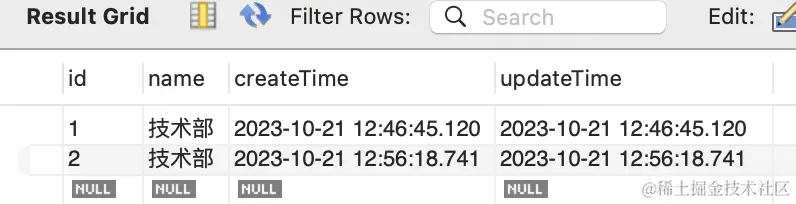
效果一样:
那如何关联查询呢?
可以这样写:
async function test3() {
    const res1 = await prisma.department.findUnique({
        where: {
            id: 1,
        },
        include: {
            employees: true,
        },
    });
    console.log(res1);

    const res2 = await prisma.department.findUnique({
        where: {
            id: 1,
        },
        include: {
            employees: {
                where: {
                    name: "小张",
                },
                select: {
                    name: true,
                },
            },
        },
    });
    console.log(res2);

    const res3 = await prisma.department
        .findUnique({
            where: {
                id: 1,
            },
        })
        .employees();
    console.log(res3);
}

test3();
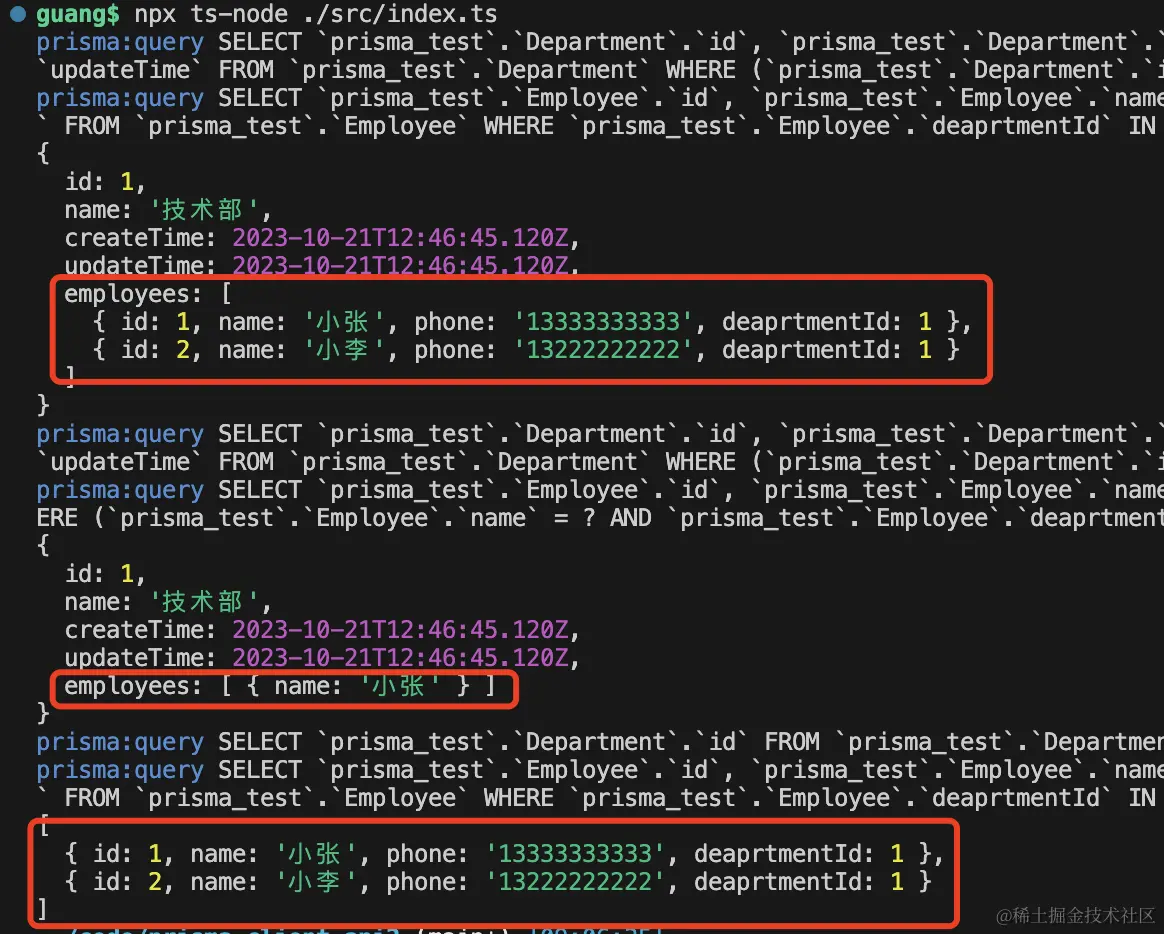
查询 department 的时候,通过 include 指定关联查询出 employees。
include 还可以指定 where 等查询的参数,进一步过滤。
此外,你也可以在查出 department 后调用 empolyees() 方法来查询。
可以看到,都能正确查出关联数据:
再就是关联更新:
async function test4() {
    const res1 = await prisma.department.update({
        where: {
            id: 1,
        },
        data: {
            name: "销售部",
            employees: {
                create: [
                    {
                        name: "小刘",
                        phone: "13266666666",
                    },
                ],
            },
        },
    });
    console.log(res1);
}

test4();
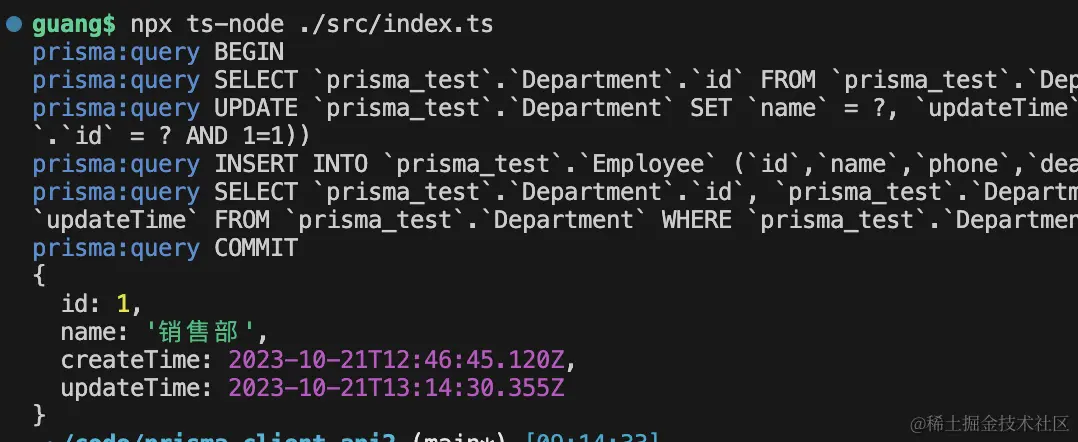
比如我在更新 department 的时候关联插入了一条 employee 的记录。
跑一下:
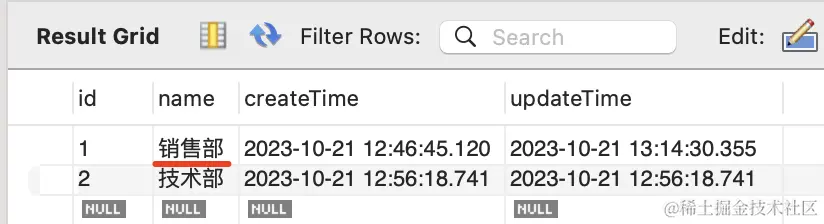
在 mysql workbench 里可以看到,id 为 1 的 department 更新了:
关联插入了一条 employee 的记录:
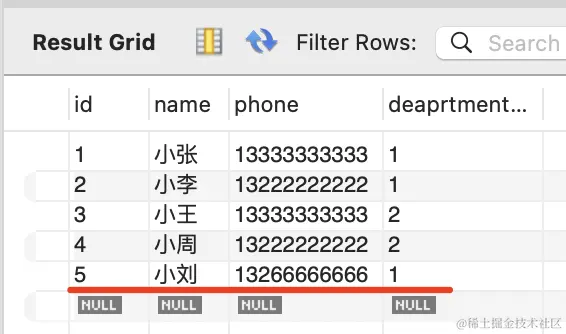
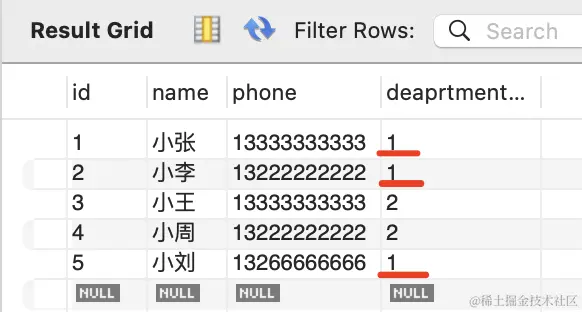
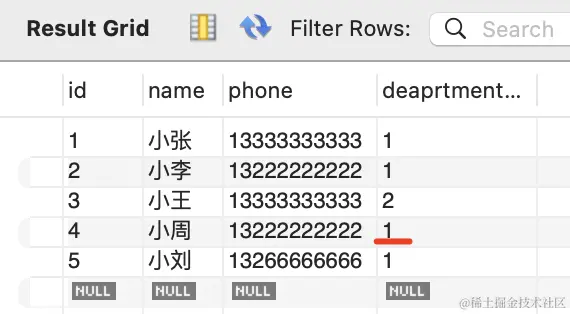
更新 department 的时候,除了可以插入 empolyee 的数据,也可以和别的 empolyee 建立关联。
比如 id 为 4 的 empolyee:
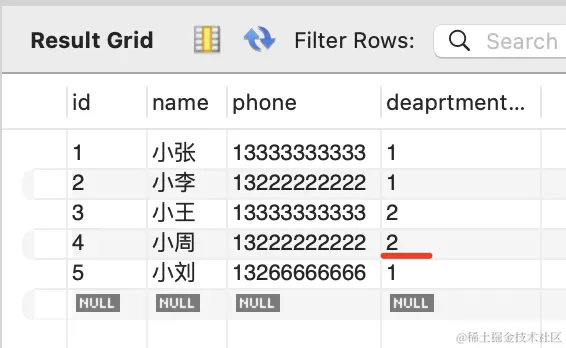
现在他关联的是 id 为 2 的 department。
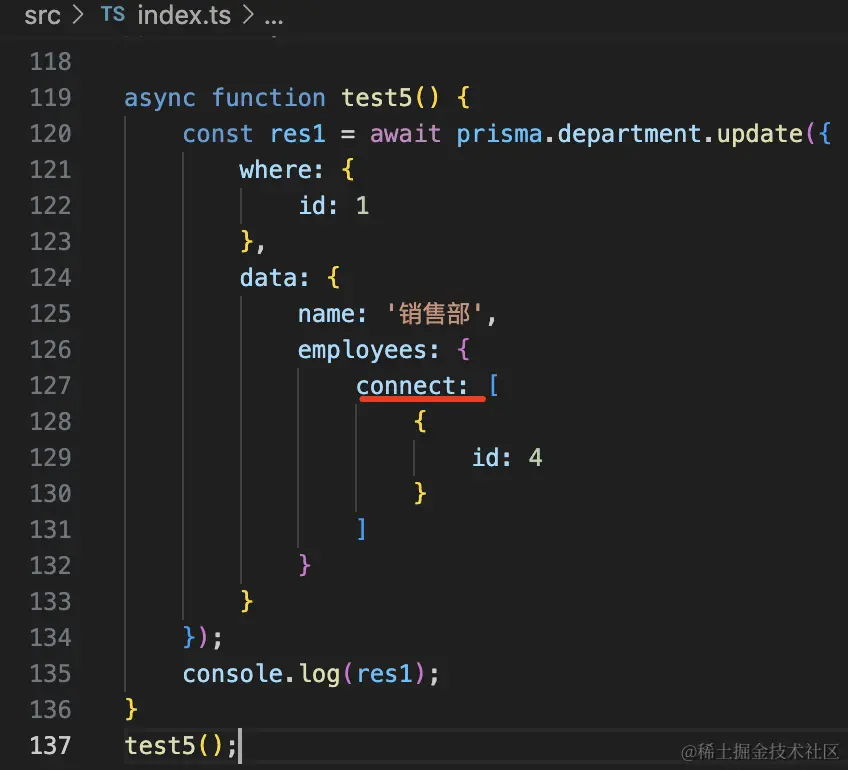
我们 update 的时候使用 connect 和它关联:
async function test5() {
    const res1 = await prisma.department.update({
        where: {
            id: 1,
        },
        data: {
            name: "销售部",
            employees: {
                connect: [
                    {
                        id: 4,
                    },
                ],
            },
        },
    });
    console.log(res1);
}
test5();
跑一下:
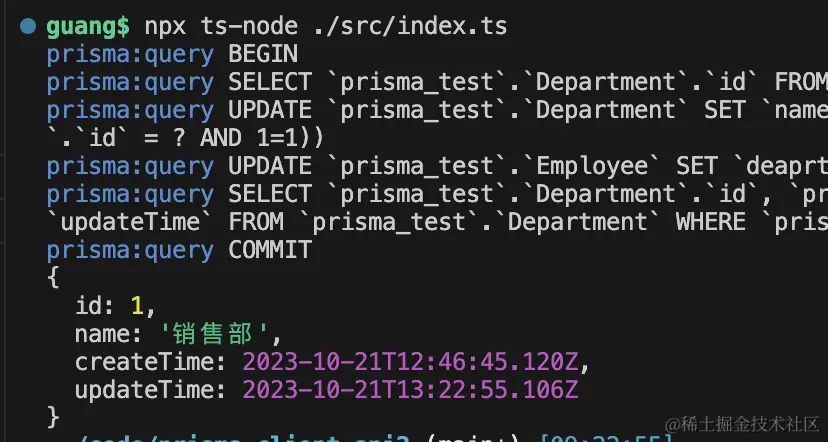
刷新可以看到,id 为 4 的 employee 关联的 department 就变了:
如果是某个 id 的数据存在就 connect,不存在就 create 呢?
可以这样写:
async function test6() {
    const res1 = await prisma.department.update({
        where: {
            id: 1,
        },
        data: {
            name: "销售部",
            employees: {
                connectOrCreate: {
                    where: {
                        id: 6,
                    },
                    create: {
                        id: 6,
                        name: "小张",
                        phone: "13256665555",
                    },
                },
            },
        },
    });
    console.log(res1);
}
test6();
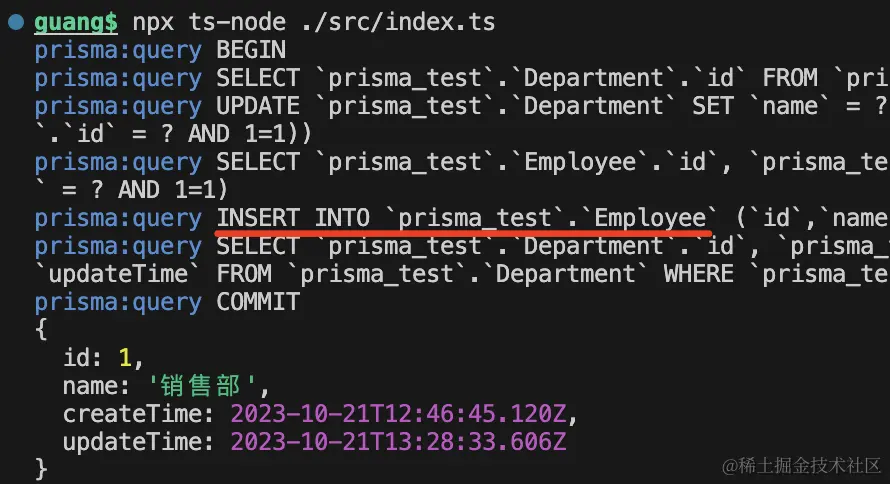
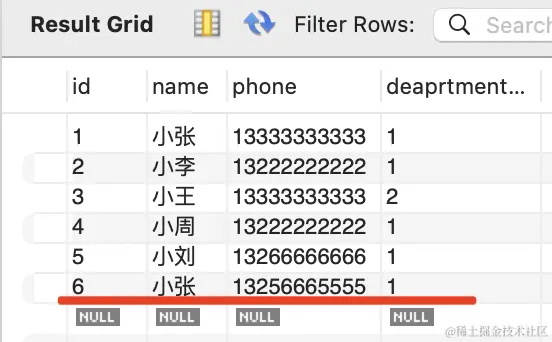
第一次跑,执行的是 insert:
第二次跑,就是 update 了:
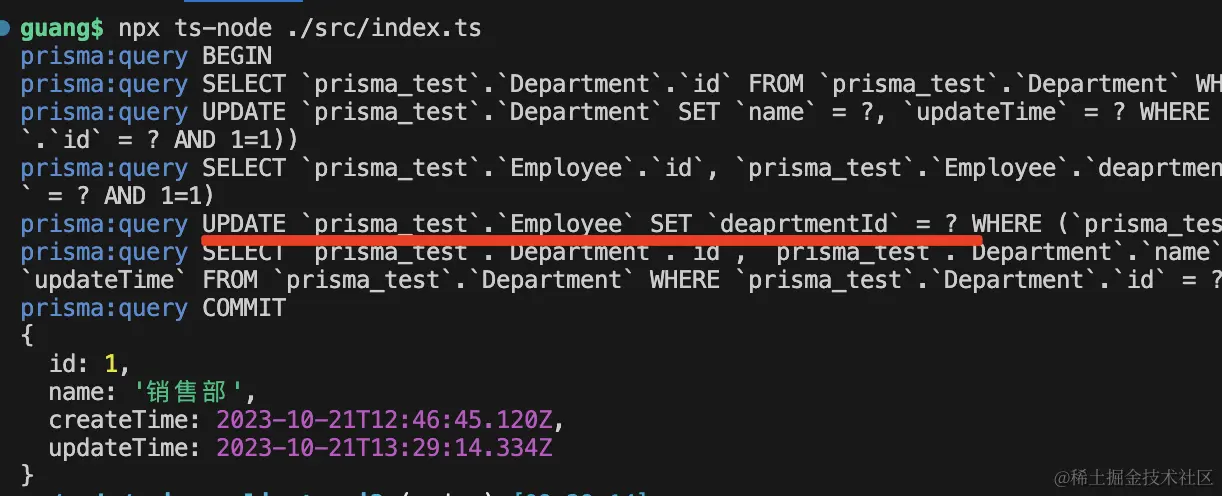
也就是说,update 的时候可以通过 create、connect、connectOrCreate 来插入新的关联 model 的记录或者关联已有的记录。
当然,create 的时候也可以这样:
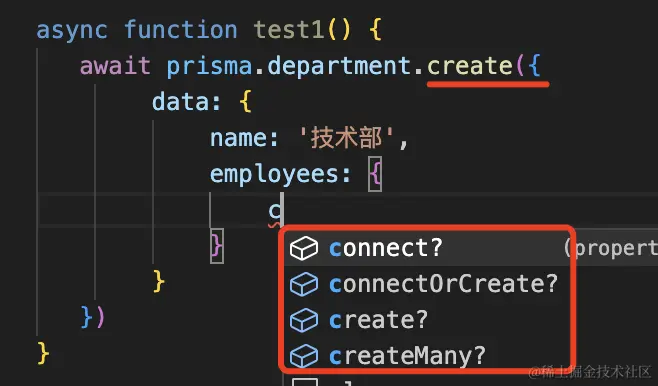
效果一样,就不一个个测试了。
再就是删除:
如果我们想删除 id 为 1 的 department 的所有 empolyee,可以这样写:
async function test7() {
    await prisma.employee.deleteMany({
        where: {
            department: {
                id: 1,
            },
        },
    });
}
test7();


这就是多个 model 关联时的 CRUD。
此外,Prisma 还可以直接执行 sql:
async function test8() {
    await prisma.$executeRaw`TRUNCATE TABLE Employee`;

    const res = await prisma.$queryRaw`select * from Department`;
    console.log(res);
}
test8();
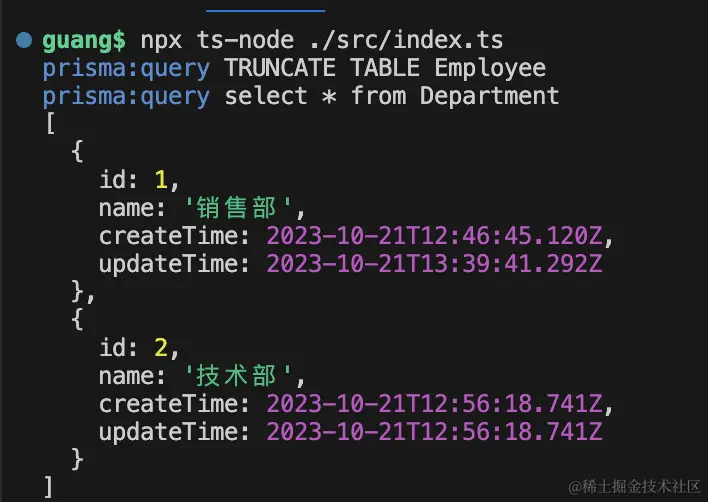
这样,当上面的 api 都不能满足需求的时候,你就可以直接执行 sql。
案例代码在小册仓库
总结
这节我们过了一遍多 model 关联的时候涉及到多个表的 CRUD 方法。
还是 findXxx、updateXxx、deleteXxx、createXxx 那些方法,只不过查询的时候可以通过 include 包含关联记录,新增修改的时候可以通过 create、connect、connectOrCreate 来关联或者插入记录。
此外,你还可以直接执行 sql。
通过这些 api,我们就能完成各种 CRUD 需求了。